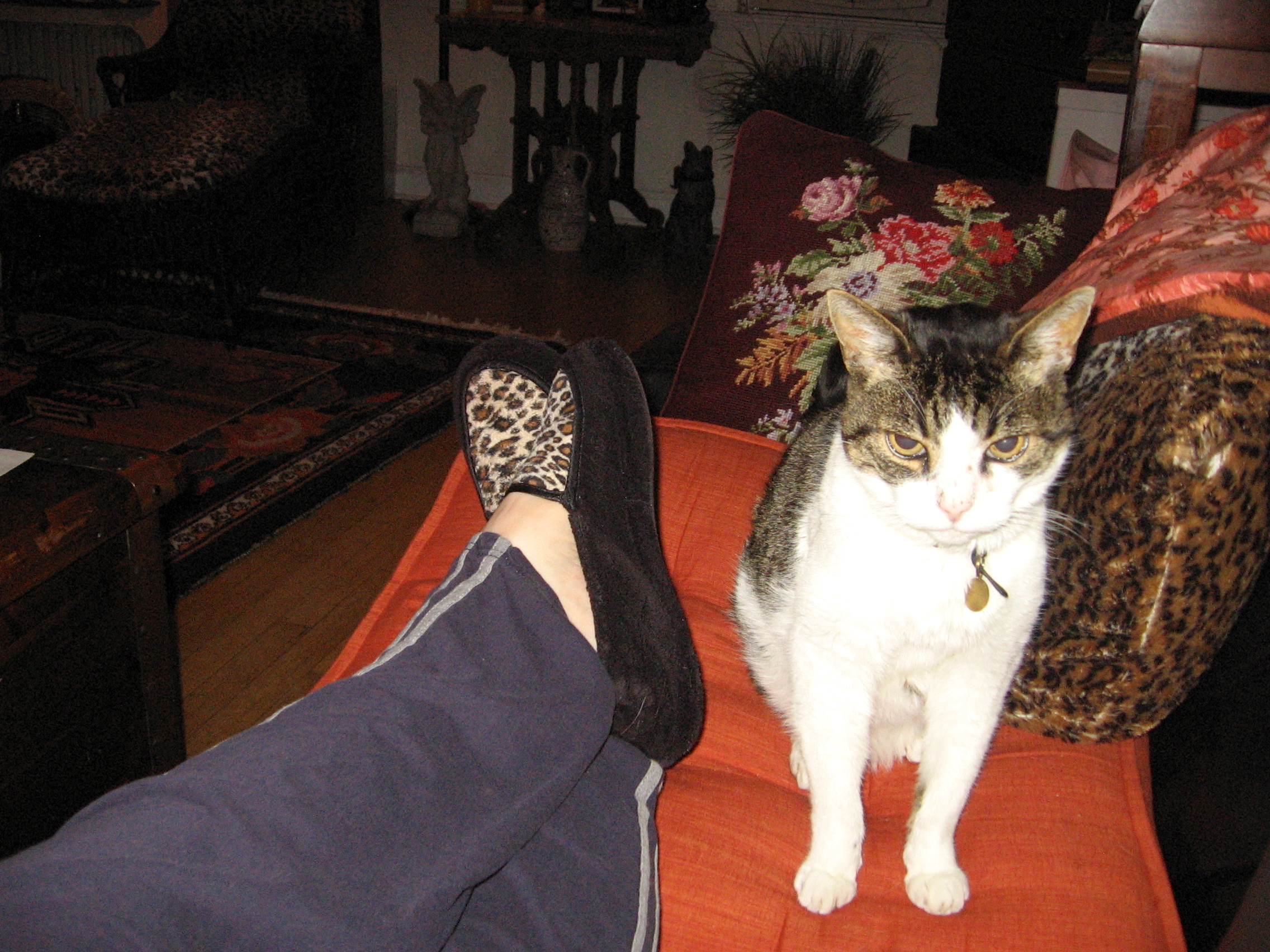
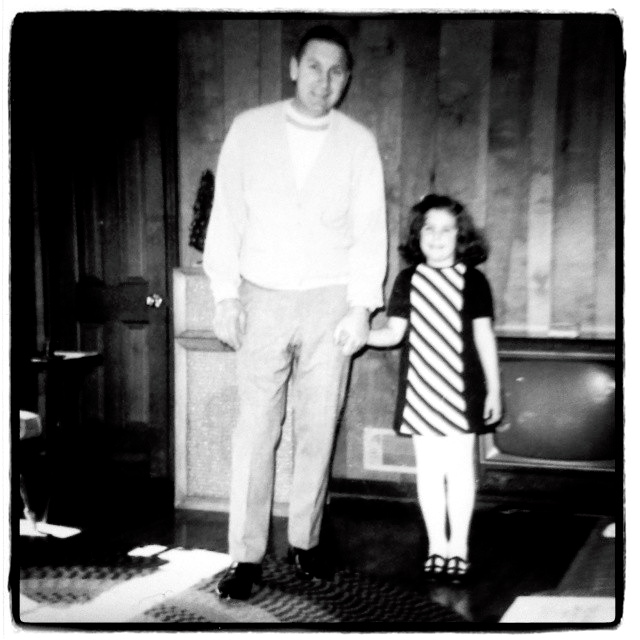
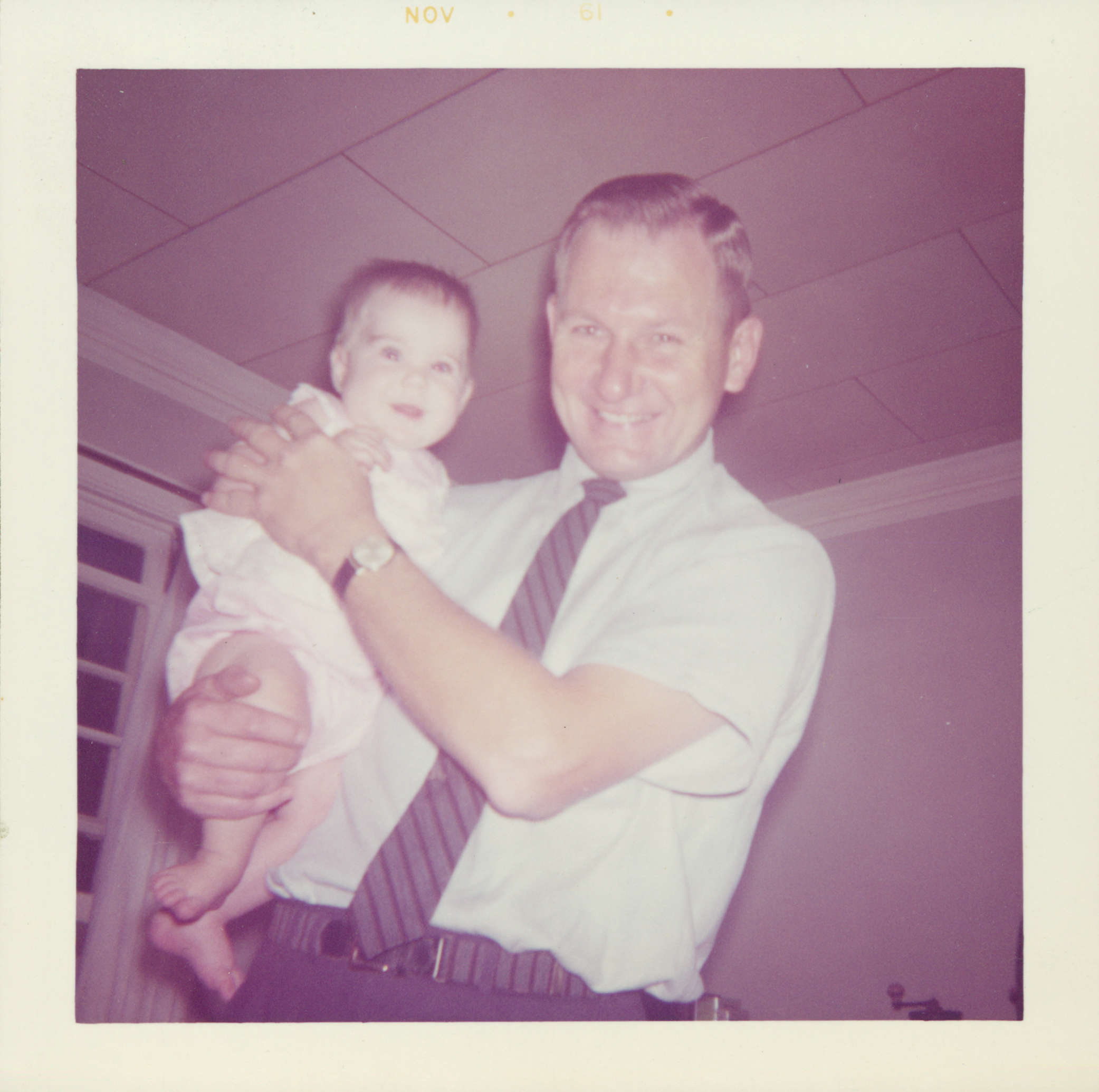
 With my father, Arnold — dearly loved & deeply missed.
*

With my father, Arnold — dearly loved & deeply missed.
*
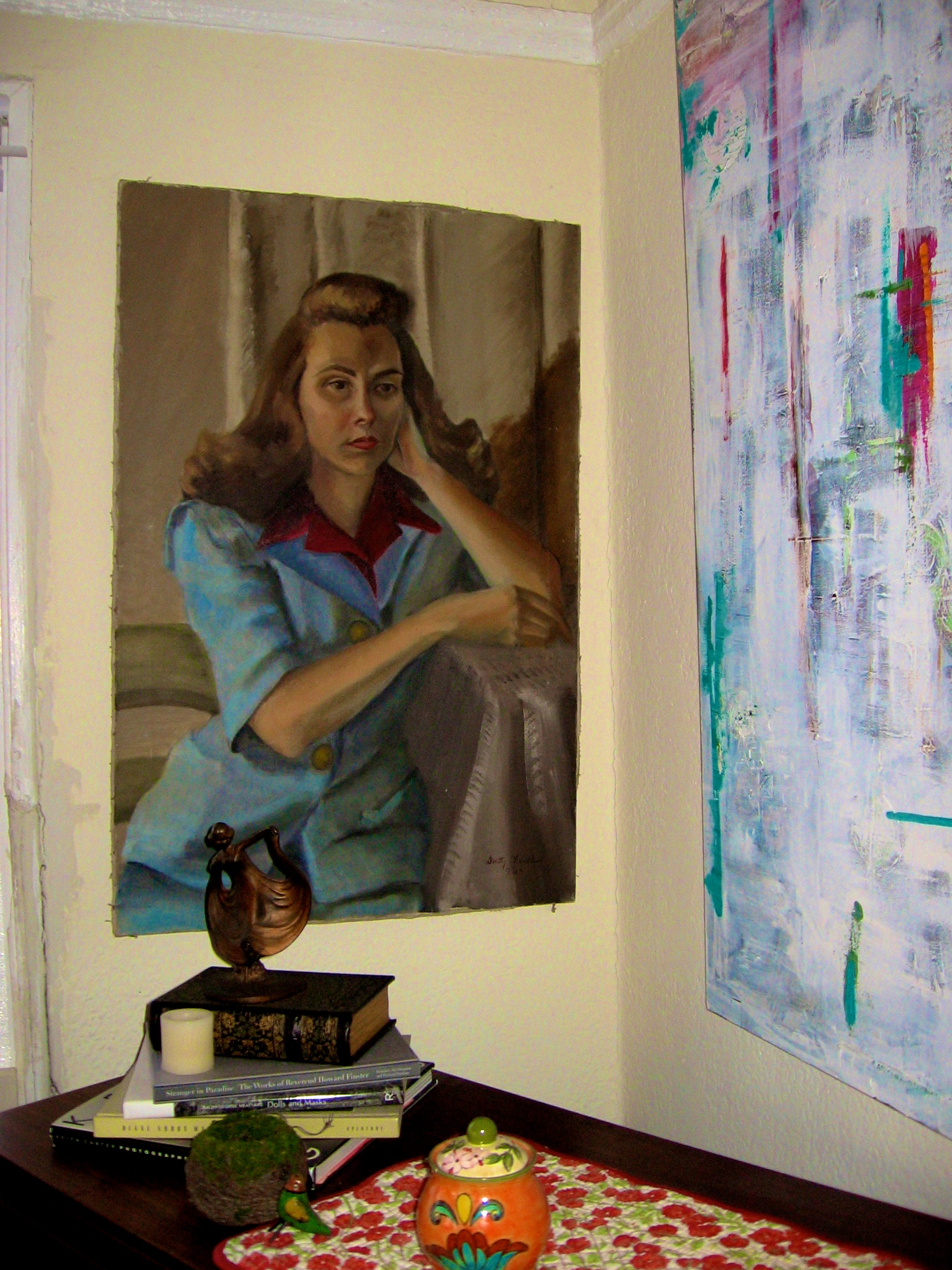
 My beautiful mother, Frances, c. mid-1940s
 My father’s younger brother, Jim de la Perriere, died during the early morning hours of March 25, 2014 in Georgia. He was a sweet man who had a not-terribly-happy life.
Jim adored his animals; he loved football; he graduated from University of Georgia law school; he served in local government in the 1970s. He knew everyone in Athens & everyone knew him, but he was, I believe, one of the loneliest people I’ve ever known.
Over the past 15 years he developed Alzheimer’s, had to give up his beloved dogs & move into a nursing home, fell apart physically in ways that no one would want to hear about & spent down every cent he had ever worked so hard to make, dying without a dime to his name in a place where no one much cared about him.
If you read this and if you can, say a prayer for him today to let him know that, regardless of everything, the world is smaller without him in it & that we’re so glad he’s finally released, & wish him Godspeed.

DdlP with Rilke (the former Safeway parking lot cat) dressed to the nines & hard at work [text is from the poem “Penelope at the Wheel”]
What was Women Poets Wearing Sweatpants?
“A feminist intervention. A poetry journal at meme speed. An attempt to give the internet what it wanted. A critique and a joke. A joke of a critique? A lot of fun. Not enough. A pop-up virtual community that published every submission it received. A stocking stuffer advertised entirely via social media, and conceived, curated, and closed in two weeks. A commentary on the too-easy conflation of women’s artwork, physical bodies, and virtual existences. A taking-back of the reigns. A nod to Barbara Kruger. A toast to the selfie. A laugh of the Medusa. Was it snarky? Was it earnest? Was it equalizing? Was it dumb? Was it empowering? It was post by post.
—Becca Klaver
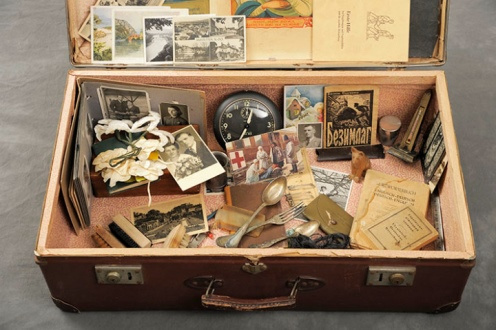 When patients were committed to the Willard Asylum for the Insane in Upstate New York, most arrived with a suitcase packed with whatever possessions they thought they might need for their time inside.
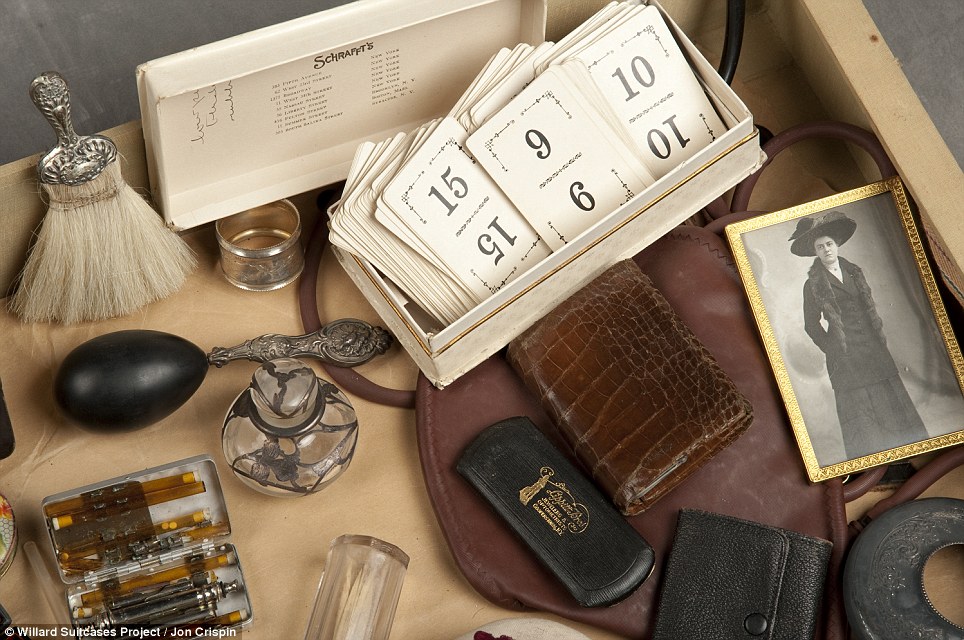
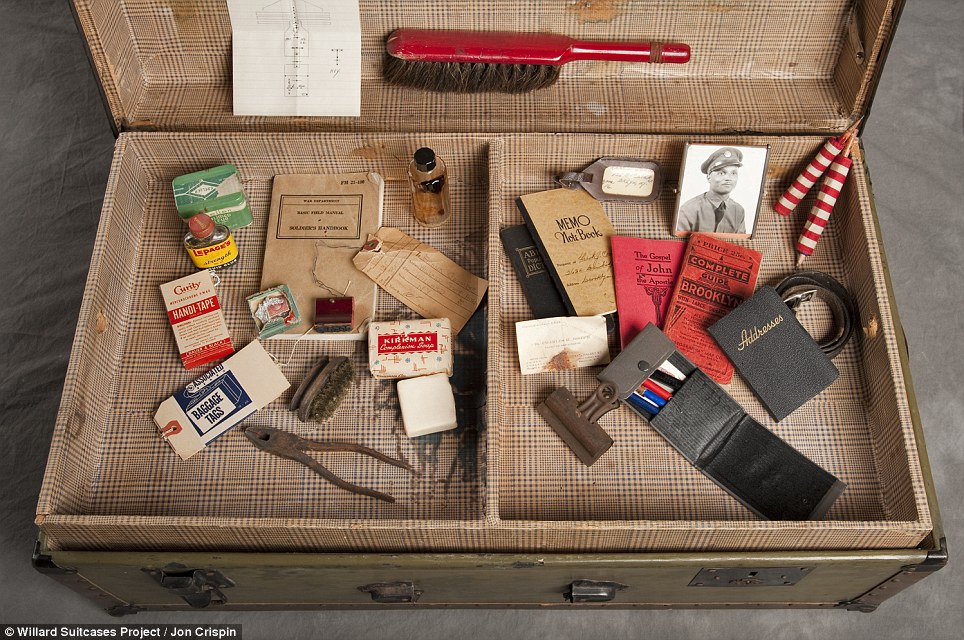
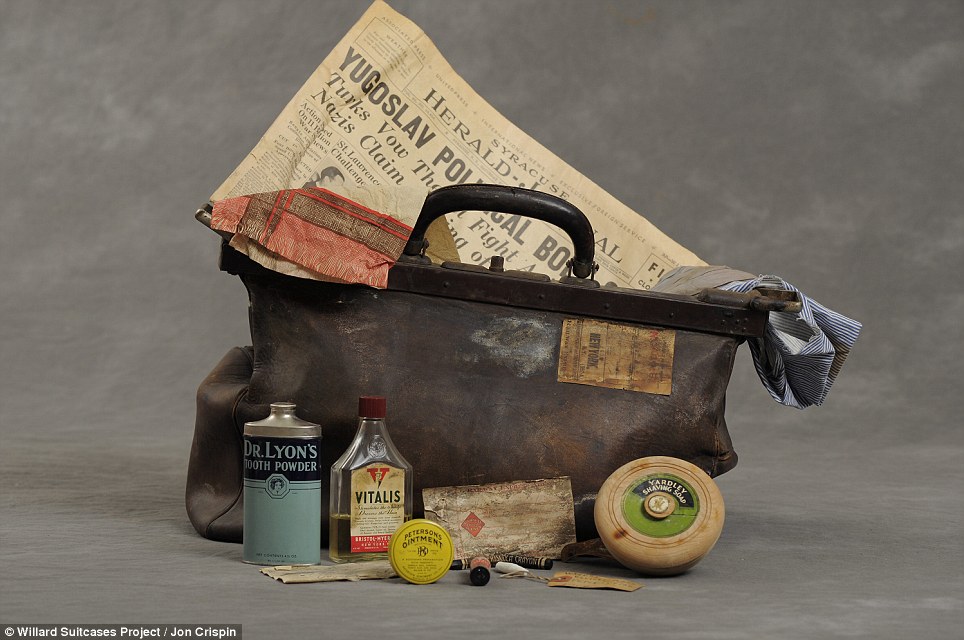
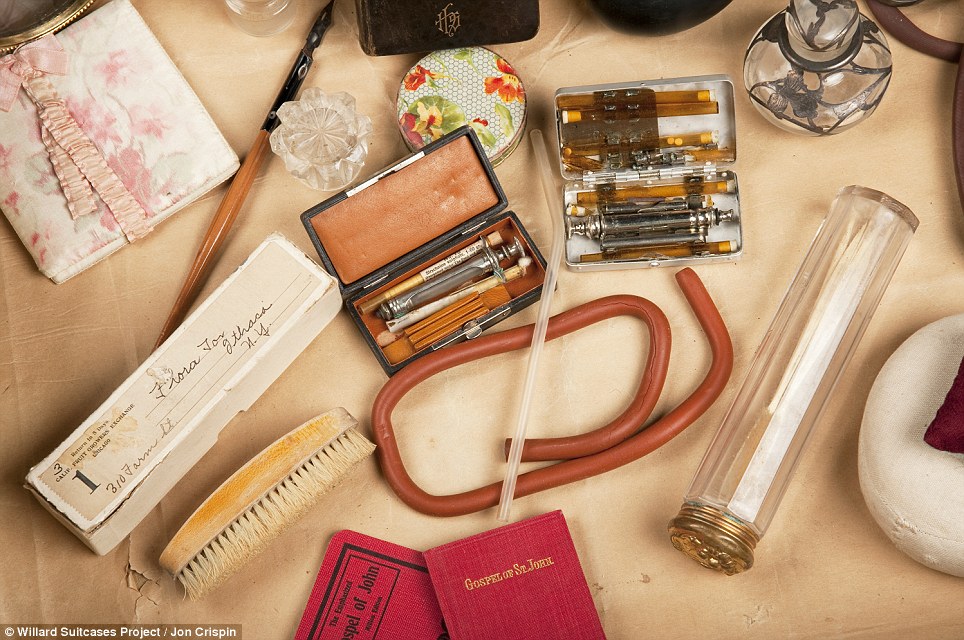
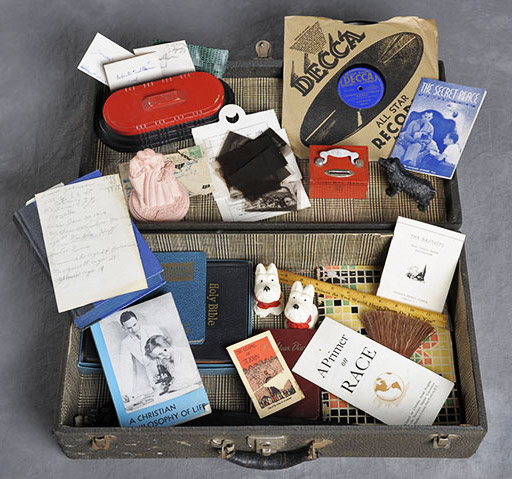
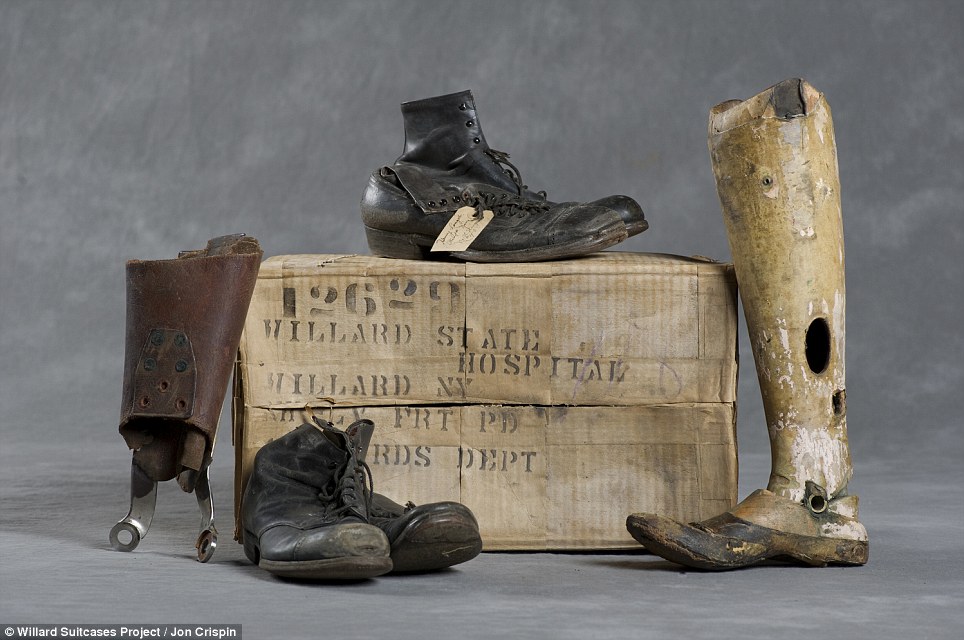 Willard inmates were committed any number of reasons including epilepsy, “promiscuity,” postpartum or menopausal depression, homosexuality, “shell shock,” “disobedience,” and the like.
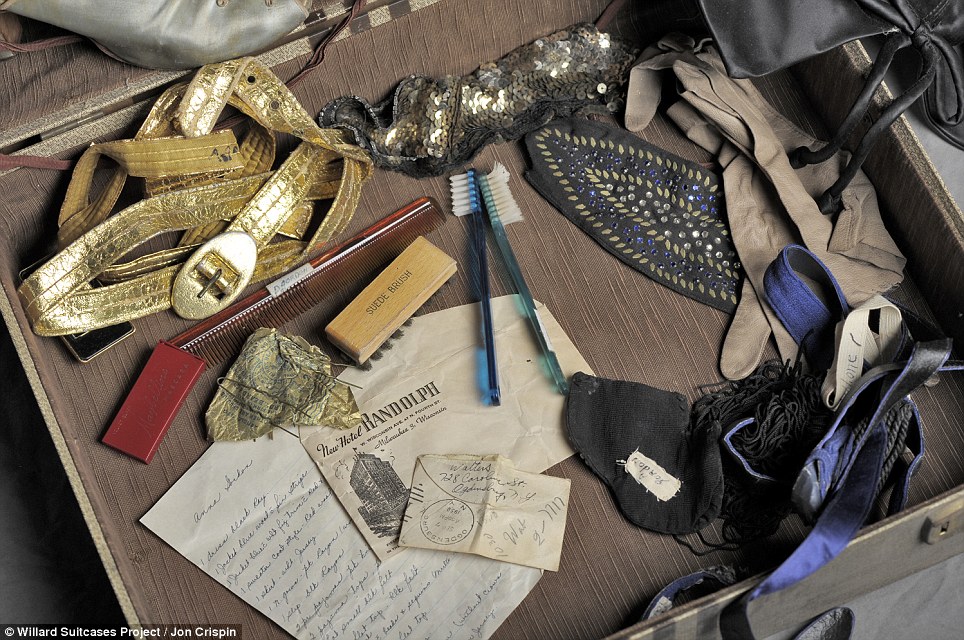
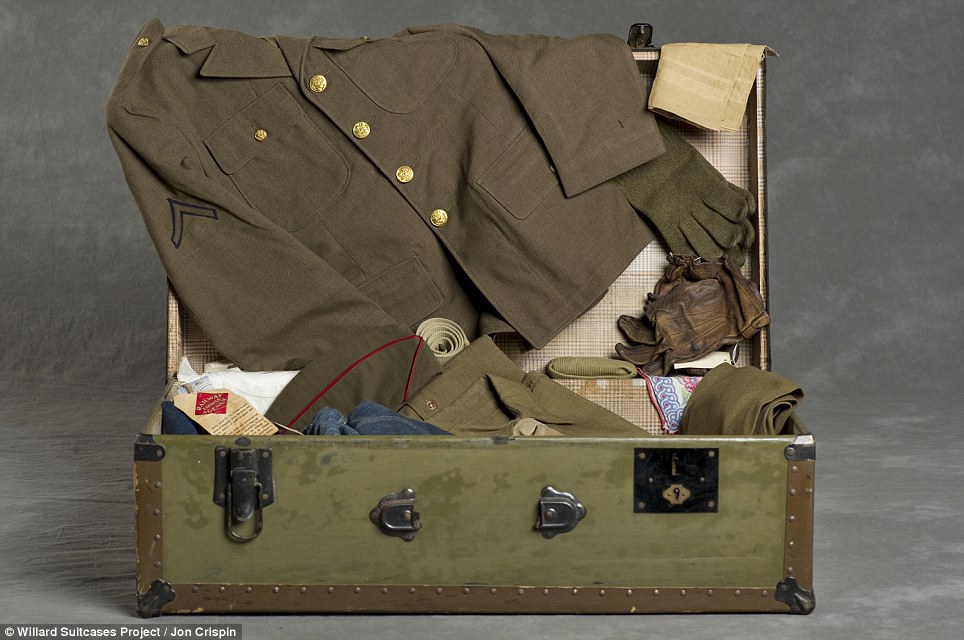
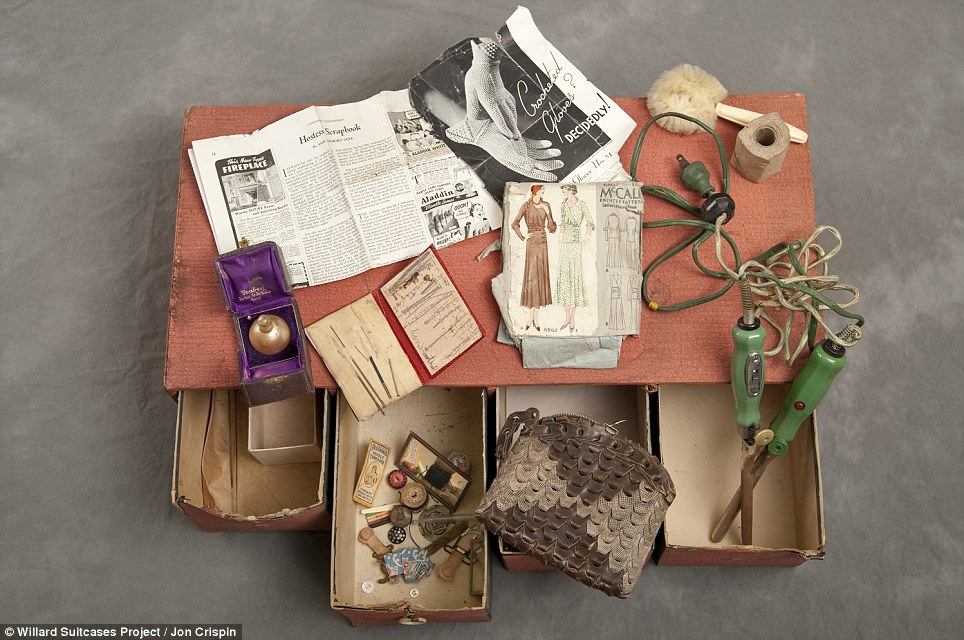
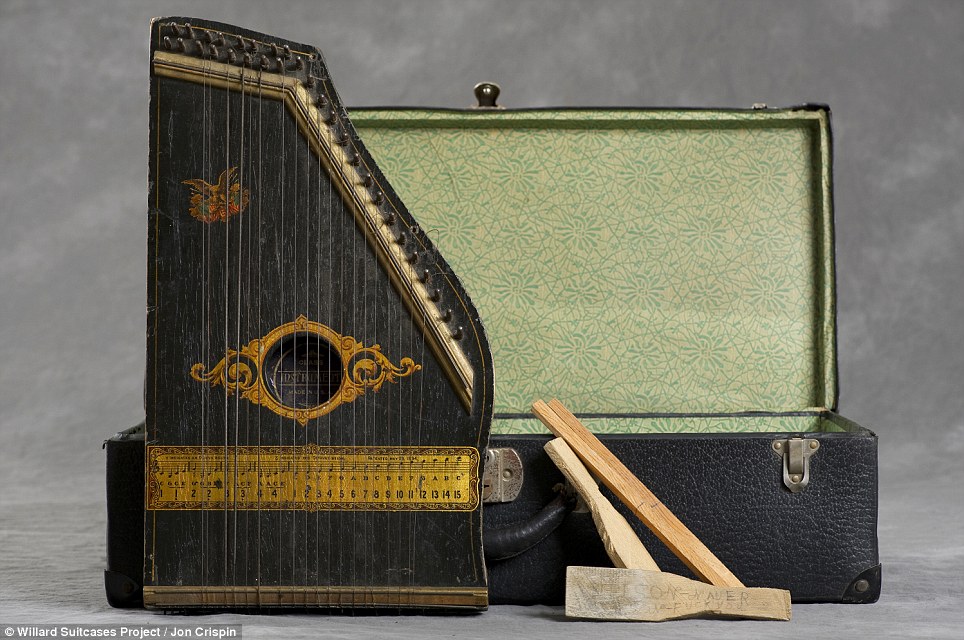 Many were committed by family members, and most never left.
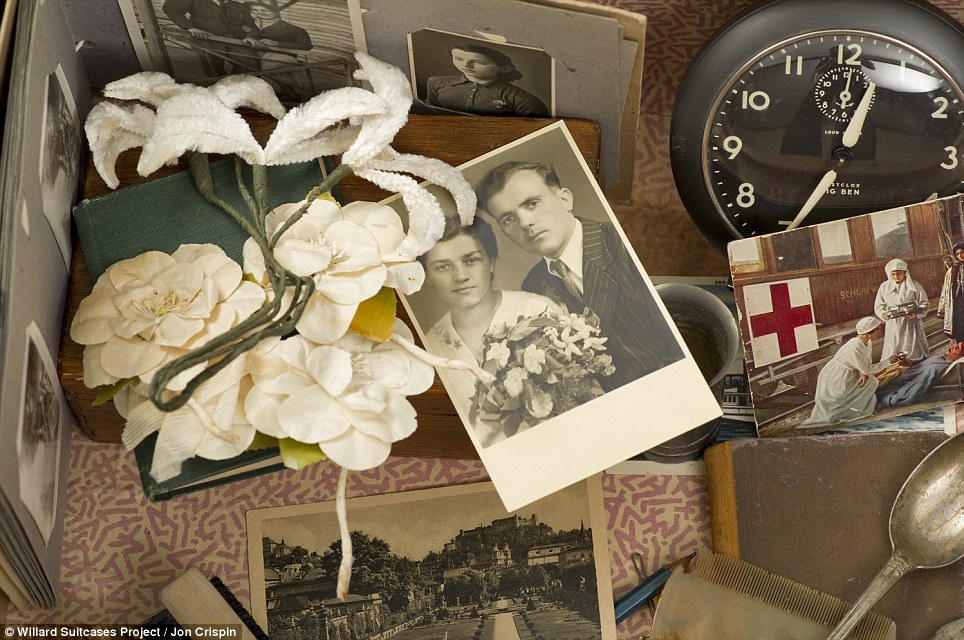 The average patient stay at Willard lasted for 30 years, & when those patients died, they were buried in graves across the street from the asylum, their suitcases locked in an attic & forgotten.
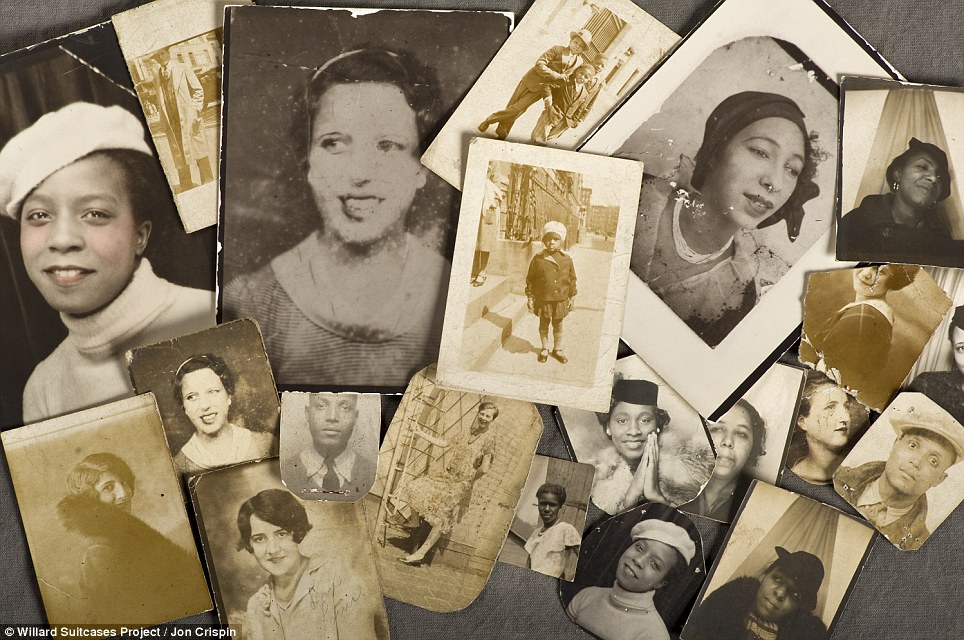
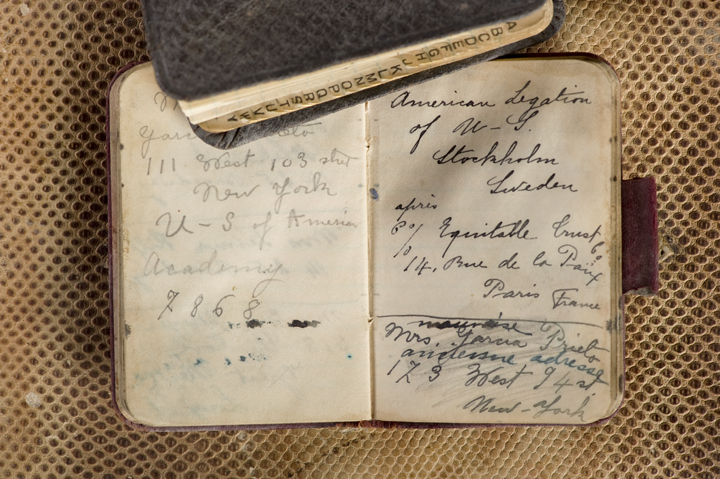
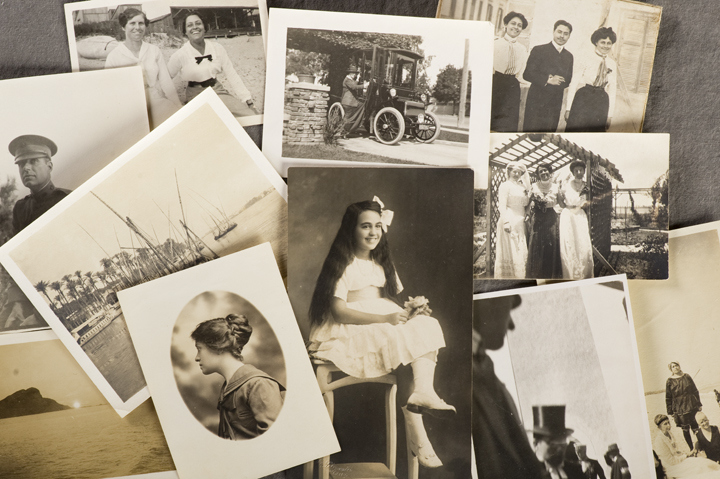
In 1995, an employee of the mental hospital discovered 400 of those suitcases, dating from 1910 to 1960.
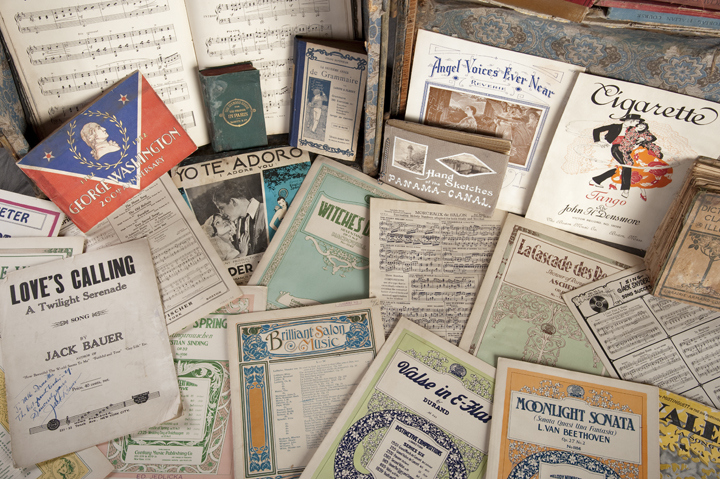 Photographer Jon Crispin’s photographs of those suitcases and their contents are currently featured as part of an exhibit at the San Francisco Exploratorium, ‘The Changing Face of What is Normal.’
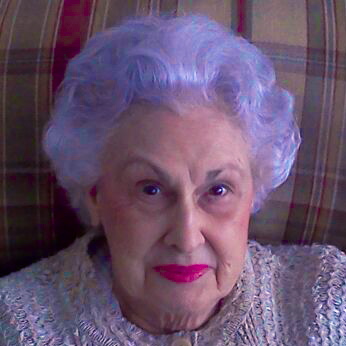 my beautiful mother, Frances